Fresh Studio attracts attention of both the Vietnamese as well as Dutch press

HANOI – The work of Fresh Studio in Vietnam attracted the attention of both the Vietnamese and Dutch press.

Fresh Studio’s director, Siebe van Wijk, was interviewed by both Vietnam’s leading newspaper, “Tuoi Tre”, as well as the Dutch financial newspaper “Het Financieel Dagblad”. The article in Tuoi Tre can be found here: www.phienbancu.tuoitre.vn

The article in het Financieel Dagblad can be found here: www.fd.nl Also interesting to read:

Pre-shipment inspection services

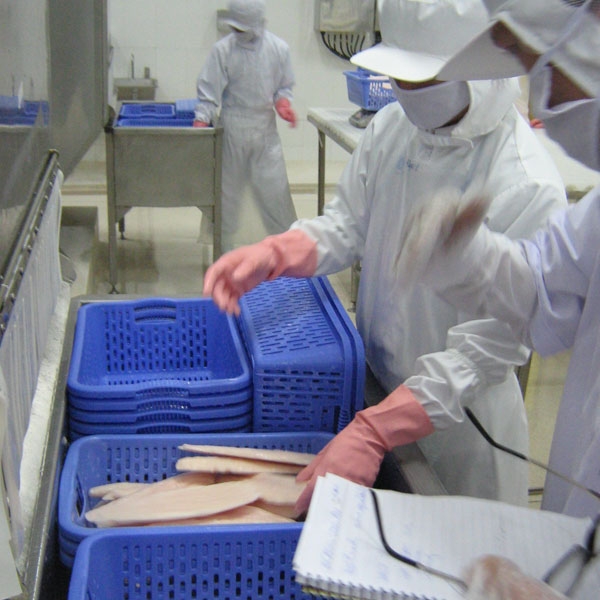
HCMC – A growing number of international clients are requesting Fresh Studio’s experienced quality assurance team to undertake pre-shipment inspection services.

Importers need a reliable and professional third party to check that the quality of the products in containers meets product specifications, and that they constitute the correct weight. Our QA team has extensive knowledge of a wide range of agricultural products, of which fish, fruit, vegetables are the most important categories. These on-sight container inspections can save thousands of euros per container for an importer.Also interesting to read:

Vietnam finds strength within

VIETNAM – Growing domestic demand has been a saving grace for Vietnam’s economy during the recent global downturn, and similar trends towards self-reliance are emerging in the fruit business.

Make no mistake: the global financial crisis had a true negative impact on Vietnam’s economy. A review of 2009 by market research firm TNS Vietnam shows that while GDP rose 5.32 per cent, exports fell by 10 per cent, FDI dropped by a whopping 70 per cent and tourism slumped by 14 per cent.

+ Download complete article

____________________________________________________

Source: AsiaFruit magazine

Publication date: June 2010Also interesting to read:

Organic market for Vietnam

HANOI – Sigrid Wertheim-Heck of Fresh Studio discusses a new organic vegetable initiative in Northern Vietnam, which marketed its first product in Hanoi at the end of May.

Please can you give us some background information to your organic production and marketing efforts in northern Vietnam?

Sigrid: The ADDA VNFU Organic Project in Northern Vietnam, initiated by the Danish NGO ADDA, has been operational since 2004. The activities were at first mainly focused on training farmers in organic cultivation methods. Although these activities delivered some nice organic supply initiatives, the actual organic supply chain remained limited to direct home delivery sales on a very small scale.

+ Download the complete article

____________________________________________________

Source: AsiaFruit Magazine

Publication date: June 2010Also interesting to read:

Adding knowledge to vegetable chains

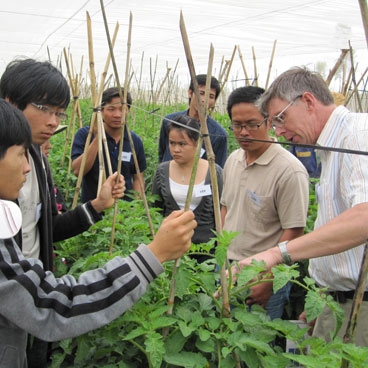
DALAT – Fresh Studio, Dalat University, Applied Plant Research (PPO) and Van Hall-Larenstein (VHL) successfully developed an R&D, extension and education project for the Dalat vegetable sector.

PPO and VHL are part the world-leading agriculture research and education institute, Wageningen UR. After having won a competitive grant in the Dutch funded “Vietnam facilty” program, the project team began its implementation in late 2010. The goal was to find tailored practical solutions for a number of serious cultivation problems faced by the market oriented vegetable sector of the Dalat region.

These problems relate to productivity and profitability constraints in vegetable farming, irresponsible pesticide use, over-abundant fertilizer use, farmer safety and consumer food safety. The current vegetable sector in the Dalat region has limitations when it comes to farmer management skills, decision-making ability, and in finding innovative solutions to address modern market requirements such as sustainable production methods, food safety and off season production. The project includes an innovative cooperation model between farmers, Dalat University, Fresh Studio, market players, agricultural policy makers and others which continually applies innovative R&D and extension to promote sustainable and profitable vegetable farming in the Dalat region of Vietnam.

Since the inception workshop in January 2011, much has occured. Based on a selection of focus crops and key issues, specialists in arable vegetable farming from PPO have developed master classes about these topics. These on-site master classes were presented to the extension team of Fresh Studio, Dalat University lecturers, and a selection of top Bachelor and Master students. The Fresh Studio team “translated” these into “farmer master classes”. Together with an extension team of Fresh Studio, farmers developed possible ideas for innovations to be tested on-site in different agro-ecological zones, as well as at the Fresh Studio R&D farm.Also interesting to read:

Made in Vietnam: pride or prejudice

HANOI – Vietnamese consumers have a passion for brands and a pride in local produce, factors that can be exploited by the country’s increasingly professional fruit sector.

Riding on my motorbike through the streets of Hanoi, it’s always a joy to behold how much Vietnamese people love brands: the bigger the better, and no matter whether they’re fake and misspelled or real and expensive, brands leap out from chests and backs, phones and bags. 

The Western lifestyle is an aspiration here, and over the past few years I have seen Vietnam transform itself into the ‘Fast Brand Nation’ with the assumption that the best is coming from the west. But is that always true? And does it also apply in the case of fresh produce? Not necessarily so.

+ Download the complete column

 ____________________________________________________

Source: AsiaFruit Magazine

Publication date: May 2010Also interesting to read:

Paper: Avocado in Vietnam. Value chain development beyond donor support

HANOI – Numerous initiatives implemented by international donors in Vietnam aiming for elevation of rural communities out of poverty, predominantly focus on farmers.

Paper contents:

Authors: S.C.O. Wertheim-Heck, P. Quaedackers, Nguyen Trung Anhb, M.S. van Wijk

1. Introduction

1.1 VCG literature in relation to the case under study

1.1.1 Global value vs. local value chains for pro-poor development
1.1.2 International lead firm vs. local lead firm
1.1.3 The role of the retail in relation to a new product introduction

1.2 Donor practices: Short term impact vs. long term business sustainability

1.3 The VC development facilitator

2. Case study – Avocado Value Chain Development in Vietnam

2.1 Methodology

2.2 Background

2.3 Participatory value chain analysis

2.4 Focus beyond farmers

2.4.1 Farmers
2.4.2 Collectors
2.4.3 Traders
2.4.4 Modern urban sales channels

2.5 The identification of a traditional trader as ‘lead firm’

2.6 Incorporation of the consumer perspective

2.7 Step by step approach

2.8 Results

3. Discussion: sustainable success: despite of or thanks to the differences?

3.1 Recommendations for further research

+ Avocado in Vietnam (306 KB)

____________________________________________________

Source: Fresh Studio

Publication date: April 2010Also interesting to read:

Dutch young man blowing fresh air for Vietnamese agricultural products

HANOI – In his story, Siebe van Wijk always used images to illustrate such as: farmers on the paddy field, harvester in green house, fish seller in the market.

All of these images contain a poor life, a smile, sad eyes and lament when there products are broken or reject. The young Dutch man talks about agricultural product of Vietnam as if it was the story of his family.

6 years ago, when he for the first time visited Vietnam, he fell in love with this country because there were quite some similarities with the Netherlands. For example by doing so well in agriculture, produce the value to feed the people, and the very high population density. Despite being a small country the Netherlands manage to be the second largest country in the world in terms of the value of exports of agriculture products, with a value of about $ 50 billions. Like the Dutch, Vietnamese like business, earn money, become the owner and develop. Each household farmer want to have progress, take risks, effort to get rich… but quite a large majority is still poor.

+ Download the complete article

____________________________________________________

Source: Tuoi Tre News paper

Publication date: April 2010Also interesting to read:

Expansion of the Fresh Studio quality assurance team

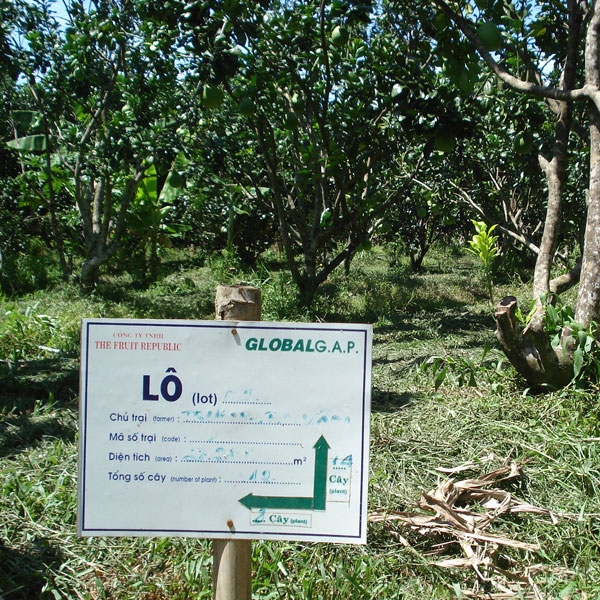
HCMC – The team of quality assurance specialists in Fresh Studio is growing to meet demand from its clients to develop quality assurance systems, and prepare companies for certification in standards such as GlobalGAP for fruit and vegetables, GLOBALGAP for pangasius and shrimp, BRC, HACCP and IFS.

Recently the leader of the Quality Assurance team, Irmen Mantingh, was trained in the latest GLOBALGAP standard for pangasius and shrimp during a GLOBALGAP organized workshop in Kuala Lumpur. At the end of the training course, Irmen passed the exam with distinction. The QA team was also expanded recently with the addition of Ms Pham Thi Thanh Phuong, who is specialized in GLOBAL for fruit and vegetables. Phuong is one of the few specialists who has successfully prepared companies in the fruit sector in Vietnam for GLOBALGAP certification.Also interesting to read:

Fresh Studio opens a new office: HCMC

HCMC – Because of the growing portfolio of assignments for clients in HCMC and the Mekong Delta, Fresh Studio decided to open its third Vietnamese office in HCMC.

Currently the HCMC team consists of marketing consultants and quality assurance specialists. The marketing team in this office will focus on assignments in HCMC, allowing Fresh Studio to offer market and consumer research in one of the fastest growing metropolitan areas of Southeast Asia. The HCMC marketing team includes a strong team of interviewers and staff who can implement marketing campaigns. The quality assurance team assists our clients in Southern Vietnam in setting up QA systems to prepare them for certification of standards such as GLOBALGAP for fruit and vegetables, GLOBALGAP for pangasius and shrimp, BRC, HACCP, and IFC.

Soon the HCMC team will expand to include a web designer, IT specialist and a team of aquaculture production and processing specialists. The office is located in the new Saigon Postel Building, 199 Dien Bien Phu street, Ward 15, Dinh Thanh district. This building is close to the city centre and on the main road which leads to An Phu in district 2.

Also interesting to read:

viVI